

Oslo Pass
If you are planning a trip to Oslo, you will soon realize two things: the Norwegian capital is rich in culture, but the cost of living is among the highest in Europe. The solution to balance these two realities is to use the Oslo Pass.
This card, promoted directly by the Tourist Office (VisitOslo), is an "all-in-one" package. It gives you free access to almost all attractions, unlimited use of public transport, and discounts on selected tours and experiences.
Available in three classic time options— 24, 48, or 72 hours—the Oslo Pass is an essential tool to consider for any exploratory vacation in Norway.
In this guide— updated in January 2026 —we find out what it includes, how activation works, and where to buy it, with a practical review based on real use, to help you calculate your actual savings.
INDEX
- How much does it cost to visit Oslo? (Single ticket prices)
- What is the Oslo Pass and what it includes
- Oslo Pass Prices
- is it worth it? the Oslo Pass is it worth it?
- Where to purchase the Oslo Pass?
- How validity works (Activation)
- Frequently asked questions about the Oslo Pass (FAQ)
- Complete your visit to Oslo: other attractions and tours
How much does it cost to visit Oslo? (Single ticket prices)
Oslo is one of the most expensive capitals in Europe in terms of cost of living. And culture is no exception.
Before finding out the details of the pass, it is useful to have a clear idea of how much individual tickets to the main museums cost when purchased separately at the ticket office.
Here are the average prices for an adult (updated to 2026):
- Munch Museum: approx. €18.00 (NOK 200)
- National Museum: approximately €18.00 (NOK 200)
- Fram Museum: approx. €14.00 (160 NOK)
- Norsk Folkemuseum: approx. €16.00 (180 NOK)
- 24-hour transport ticket: approximately €12.00 (137 NOK)
As you can see, by visiting just three of these museums and traveling by public transport, you can easily exceed €60-70 in a single day.
This is where theOslo Pass, the official tool created specifically to reduce these costs, allowing you to see more without increasing costs, and make the city accessible to everyone.
What is the Oslo Pass and what it includes
The Oslo Pass can be defined as an "all-inclusive" city card, which solves the problem of tourist costs when visiting Oslo.
Unlike passes in other cities that offer modular packages, here the formula is unique and simple.
For the entire duration of the card's validity (which can be 24, 48, or 72 hours), you are entitled to:
- Free admission to over 30 museums and attractions.
- Unlimited public transportation in zones 1 and 2 (city center and surrounding areas).
- Exclusive discounts on activities, rentals, shops, and restaurants.
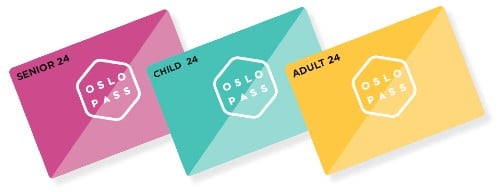
This balanced structure makes it the ideal tool for those who want the freedom to enter and exit museums without having to purchase individual tickets, eliminating the need to queue at the ticket office (where possible) and exchange currency.
See the complete list of attractionsLet's look in more detail at what is included.
Free attractions and museums
The Oslo Pass's main advantage is free access to Norway's most expensive cultural sites.
Here are the main attractions included, which alone often justify the purchase:
- Munch Museum (MUNCH): The world's largest collection dedicated to Edvard Munch (includes The Scream)
- National Museum (Nasjonalmuseet): Art, architecture, and design in a spectacular modern building.
- Fram Museum: Dedicated to polar exploration (not to be missed).
- Norwegian Folk Museum (Norsk Folkemuseum): An open-air museum with historic wooden churches (Stave Churches).
- Kon-Tiki Museum: Home to the boats used in Thor Heyerdahl's famous expeditions.
In addition to these, Akershus Fortress, Holmenkollen Ski Museum, the Resistance Museum, and many others are included.
Note: The Viking Ship Museum is closed for renovation until 2027.
Purchasing the Oslo Card provides free admission to about thirty attractions.
Mentioning the most important tourist attractions,free admission is included to:
On this page (scroll down to "useful content"), you can download the official updated PDF with the complete list.
Public Transportation: How it works
The most convenient aspect of the card is that it serves as a pass for public transportation operated by Ruter. For the entire duration of the pass, you have unlimited travel in Zones 1 and 2.
✅ WHAT IS INCLUDED:
- All public transport in central Oslo (buses, trams, T-bane metro).
- Ferries to the islands in the fjord (e.g., Hovedøya, Gressholmen).
- Ferries to the Bygdøy peninsula (where many museums are located).
- Local trains within zones 1 and 2.
❌ WHAT IS NOT INCLUDED (Please note):
- Transfer from Gardermoen Airport (OSL): The Flytoget express train is NEVER included.
- Torp Airport Transfer (TRF): Too far away, not included.
- Hop-on Hop-off Buses: Operated by private companies, not included.
With an active Oslo Pass (which covers zones 1-2), you don't have to buy a full ticket, just a supplementary ticket for the missing zones.
Ask at the ticket office or at the ticket machines to save around 50% on the airport route.
Extra discounts: restaurants and activities
Often underestimated, the "discounts" section allows you to save even more on the cost of your stay during your trip, which is usually high due to the cost of living in Norway.
By showing your active card, you will receive discounts of 15% to 30% on:
- Restaurants: Discounts (usually 20%) at selected establishments such as Rorbua (traditional cuisine) or the Hard Rock Cafe.
- Entertainment: 20% discount on Tusenfryd amusement park, sled rentals at Skimore, or tickets to the Philharmonic.
- Shopping: Discounts at selected Norwegian design stores (e.g., Norway Designs).
Tip: check the list of participating restaurants before dinner; on a bill for two people in Oslo, a 20% discount equates to savings of several tens of euros.
See all details of the Oslo PassOslo Pass Prices
The cost of the card varies depending on the duration chosen.
Official prices are always in Norwegian kroner (NOK), so the cost in euros may fluctuate slightly depending on the exchange rate on the day.
One Norwegian krone (NOK) is worth approximately €0.086, but for convenience, the table shows prices in both NOK and EUR.
There are three price categories: Adults, Children (6-17 years old), and Seniors (67 years oldand above).
Note: Unlike other cities, the "Senior" discount applies to those aged 67 and above.
For children under the age of 6, the pass is not sold, as admissions are already free at most attractions, and the pass would not be convenient for them.
Details of prices are shown in the table.
| Validity | Adult | Child (6-17 years old) |
Senior (+67 years old / Honnør) |
|---|---|---|---|
| 24 hours | 580 NOK (approximately €49) | 290 NOK (approximately €25) | 465 NOK (approximately €40) |
| 48 hours | 845 NOK (approximately €72) | 420 NOK (approximately €36) | 675 NOK (approximately €58) |
| 72 hours | 995 NOK (approximately €85) | 495 NOK (approximately €42) | 795 NOK (approximately €68) |
Student discount: There is a 20% discount for students under 30, but it is only available when purchasing the pass in person at the ticket office in Oslo, upon presentation of a valid international student card with photo. It cannot be purchased online.
Check availability and official pricesOslo pass for long trips
Statistically, most tourists visit Oslo in 2-4 days, but for longer stays it is useful to consider how to make the most of the Oslo Pass.
If your trip lasts up to 4 days, it is best to purchase the pass for 2 or 3 days, depending on the number of attractions you want to visit, and devote the remaining day to free activities such as walking in the historic districts, exploring the waterfront or relaxing in the parks.
For stays of a week or more, you can opt for the same strategy or purchase two 3-day passes, to be activated consecutively, covering almost the entire week with free admission and transportation included. This choice is advantageous for those who plan to visit many museums and move frequently by public transportation.
is it worth it? the Oslo Pass is it worth it?
Oslo is an expensive city, and tickets to individual museums cost on average between €16 and €20.
A transport pass costs around €13 per day (a single 24-hour ticket for zones 1-2). For two days, this comes to around €26.
But it's not automatically cheaper: it depends on how much you want to visit.
Let's do a real-life simulation for an average tourist spending 2 days (48 hours) in Oslo.
WITHOUT PASS (Estimated costs):
- 48-hour transport pass (Zones 1-2): ~ €26.00
- Munch Museum admission: ~ €18.00
- National Museum admission: ~ €18.00
- Fram Museum admission: ~ €14.00
- Folklore Museum admission: ~ €16.00
TOTAL "A LA CARTE": approximately €92.00
💰 WITH OSLO PASS (48 hours): approximately €72.00
Result: With the Oslo Pass, you save around €20 per person by visiting just four museums in two days, not to mention the freedom of taking trams and ferries without having to buy tickets each time.
If you add a lunch with a 20% discount or visit a fifth museum (e.g., Kon-Tiki), the savings easily exceed €30-35.
The Verdict
- ✅ RECOMMENDED IF: It's your first time in Oslo and you want to see the main museums (at least 2 per day) and get around freely. The 48- or 72-hour version offers the best value for money.
- ❌ NOT RECOMMENDED IF: You are a student (better to get the discount on site), if it is Monday (many museums are closed, check first!), or if you just want to walk around the city without going into the attractions.
Other advantages: practicality
In addition to the direct savings, the pass is extremely practical. Instead of buying individual tickets and paying each time in Norwegian kroner (with possible exchange fees), one can make a single, uncomplicated online purchase in euros.
Buy Oslo PassWhere to purchase the Oslo Pass?
The easiest and most convenient way to purchase the Oslo Pass is online, on the Tiqets website, and then pick up the card when you arrive in the city.
The site is in Italian, payment is made directly in euros, with no currency exchange fees, and the purchase is fully refundable up to 24 hours in advance.
Alternatively, you can purchase this card directly through the Oslo Pass - Official City Card app, or on the spot at the Oslo Visitor Centre or at one of the authorized retail outlets.
The full list of outlets can be found on the official visitoslo.com website.
My advice is to take advantage of the convenience of purchasing on Tiqets, taking advantage of the 24-hour cancellation and refund policy, which is always important to prevent unforeseen travel mishaps.
It may happen that for certain periods, usually very limited, the Oslo Pass is not available for purchase on the Tiqets website.
In this case, you can purchase it on the visitoslo.com website as indicated above: the price is similar, but you lose the benefit of free cancellation.
Otherwise, if your trip is not imminent, you can wait to see if it becomes available again on Tiqets. If not, a few days before your trip, go to the official website, now that you are sure your trip is confirmed.
Where do you pick it up?
After purchase, you will receive a voucher via email, which you must presentat the Oslo Visitor Center to collect your physical pass and printed guidebook.
The visitor center is located at Oslo Central Station, in Østbanehallen, a central location that you will almost certainly pass through when arriving from the airport, or in any case, it is located right in the city center.
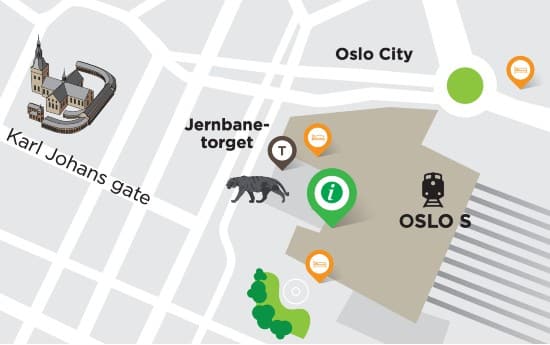
Ⓘ The map of Oslo Visitor Centre at the central station - Østbanehallen (Jernbanetorget 1) - where to pick up the pass
How validity works (Activation)
The Oslo Pass is very flexible. If you purchase it today, you can activate it in a month's time. It is valid by the hour, not by the day.
Practical example: If you have a 24-hour pass and activate it (by writing the date and time on the back) at 5:00 p.m. on Tuesday, it will be valid until 5:00 p.m. on Wednesday. This allows you to use it, for example, for a discounted dinner on the evening of your arrival and for museums all day the following day.
- If you purchased on Tiqets and then picked up the paper version of the pass as explained in this guide, activation is done simply by writing the start date and time in the space provided on the back of the pass.
- On the other hand, if you purchase the digital version through the official app, you will need to activate it directly from the app before the first use.
When you have the active pass, you can present it at the entrances of attractions to enter. For public transportation, just show it to the driver or conductor in case of verification.
Frequently asked questions about the Oslo Pass (FAQ)
Gardermoen Airport (OSL) is located in Zone 4, while the pass only covers Zones 1 and 2.
The Flytoget express train is always excluded and must be paid for separately.
Money-saving tip: If you take the Vy regional trains (not Flytoget), you can use the Oslo Pass to cover Zones 1 and 2. You will only need to purchase a "supplementary ticket" (Tilleggsbillett) from the ticket machine to cover the remaining distance to Zone 4, saving you around 50%.
No, the pass is only valid once it has been activated. You can purchase the pass online even months before your trip.
If you have a physical pass: activate it by writing the date and time on the back with a pen before using it for the first time.
If you are using the official app: activate it by clicking the activation button on your smartphone just before boarding your first vehicle or entering your first museum.
Yes: Public ferries operated by Ruter (e.g., line B1 to the islands of Hovedøya, Lindøya, etc.) and the ferry to Bygdøy (where the museums are located) are included.
No: Private mini-cruises or guided boat tours in the fjord are not included, although some operators offer a discount (usually 15%) to pass holders.
It depends on their age.
0-5 years: Not worth it. Children travel for free on public transport and get free entry to almost all museums.
6-17 years: Very worthwhile. There is a reduced Oslo Pass for children that is very cheap (about half the price of the adult pass) and covers everything. It is the ideal solution to avoid buying reduced tickets for each individual attraction.
Complete your visit to Oslo: other attractions and tours
A good tourist pass is the foundation for an optimal trip, but for the finishing touches—like a museum not included or a special experience—a single purchase is perfect. Here is a selection of options in Oslo to help you perfect your schedule.
See tickets for all major attractions in Oslo
I hope you found this analysis useful. Figuring out whether and which pass to buy for Oslo seems complicated, but with the calculations at hand, you can make the right choice (even if it means not buying one!).

I'm Lory, Senior Travel Analyst and founder of PassTuristici.com.
I combine analysis of prices and conditions of passes with my direct experience in the field: objective data and personal advice to optimize your budget and enjoy your vacation.
Simply put, your guarantee of savings ✅.


Lascia un commento